Posted on — Leave a comment

The Savior Within Us: Decoding “Coming of Mashiah”

Zhanna Day talking about some secrets

We are all searchers. In one way or another, collective human history has been marked by a deep-seated longing for someone or something to arrive from the outside and liberate us. For millennia, the myth of the Messiah—the Savior, the Deliverer—has served as a projection of our profoundest hopes and fears. We have awaited Him in the heavens, in ancient prophecies, in transformative leaders, or in radical systemic shifts.

But what if the greatest advent is not an event in the future, but a discovery in the present? What if, all this time, we have been gazing in the wrong direction?

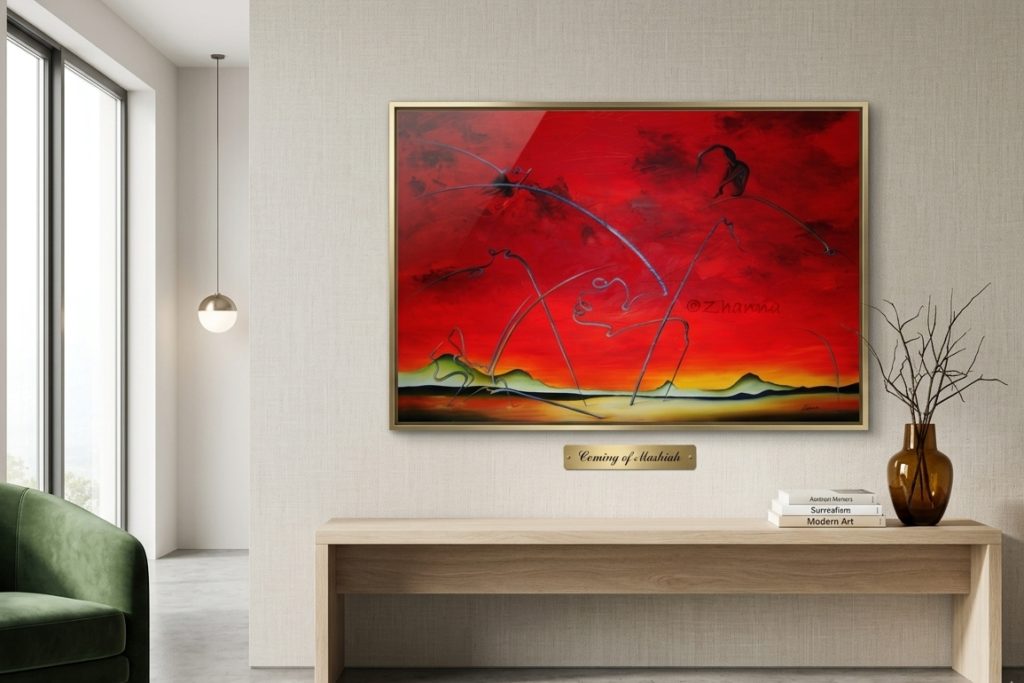
My painting, “Coming of Mashiah”, is a visual exploration of this metaphysical dilemma.
zhanna day_oil paintin, mystery

Gazing into the Canvas

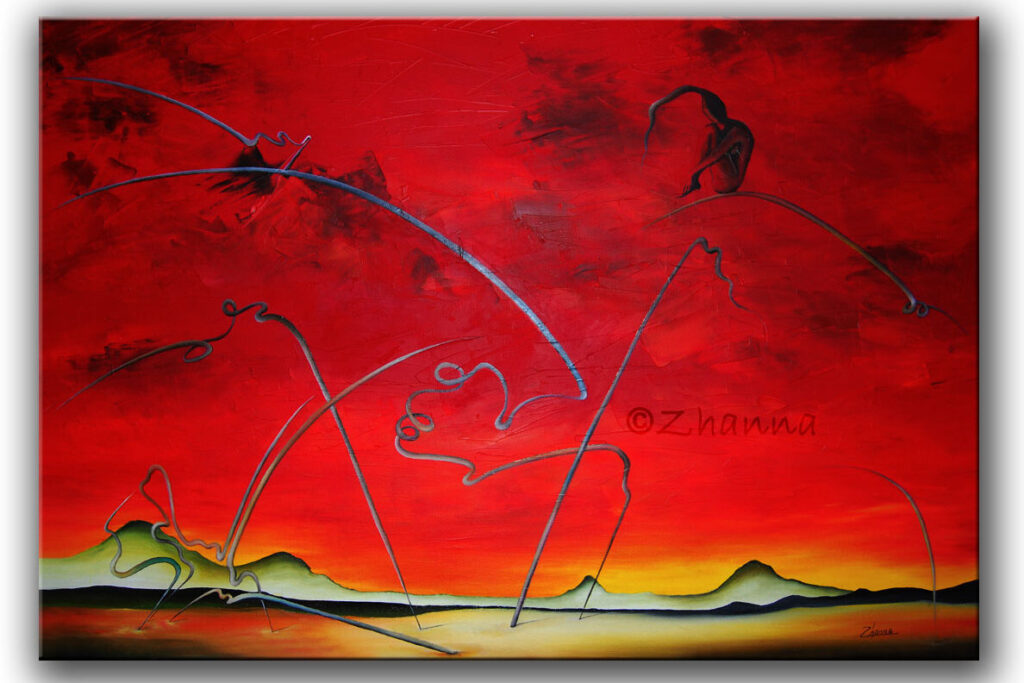
At first glance, the eye is captured by a burning, tempestuous red sky that dominates the space. It is a sky of raw passion, chaos, and intense seeking—perhaps even of spiritual pain. It symbolizes the world we inhabit: a realm of duality, daily obligations, frantic pacing, and sensory noise. Beneath this emotional ocean lies the thin, subtle horizon—the ground beneath our feet where we walk, vulnerable and small.

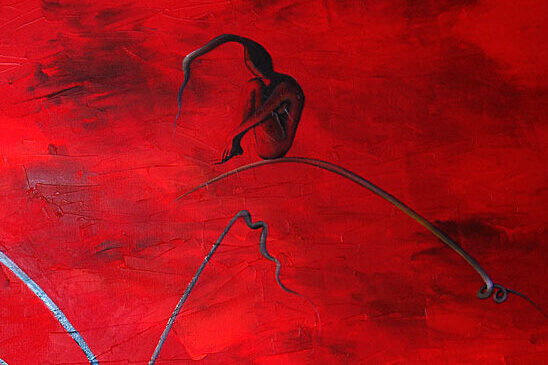
Traversing this expanse of red, like fragments of ancient wisdom or invisible currents, are abstract, curving lines. They resemble wires carrying unseen energy or the labyrinthine pathways of the mind. High above, perched upon one of these delicate arcs in solitary contemplation, sits a figure.

This figure is simultaneously the Seeker and the Sought. Positioned in deep meditation—or perhaps quiet reflection before eternity—it represents the Messiah. Yet, He does not descend from the heavens as a triumphant conqueror; He simply sits there, floating in alignment with His own essence.

This brings us to the heart of the message:

Whom Are We Truly Awaiting?

My perspective on the savior is both simple and deeply transformative: We are already our own messiahs.

The moment we come into existence, every soul is endowed with a divine spark from the luminous dust of Creation. We are born with the inherent right to be our own liberators. Every act of compassion, every choice of love over fear, every yearning for truth is a micro-advent of this inner Messiah.

The tragedy is that we forget. Lost in the rhythm of worldly vanity, burdened by routine and the weight of secular duties, we fall asleep to our own divinity. Begging for salvation from the outside, we remain shivering at the threshold of our own home, waiting for someone else to unlock the door.

In “Coming of Mashiah,” the solitary figure is the salvation. Yet, it is elevated so high above the horizon that it demands conscious effort to perceive and embody.

How do we bridge this gap? How do we bring the Messiah down from the abstract arc in the sky and weave Him into our daily lives?
coming of mashiah 50x75 drop web

Activating the Inner Savior: Practical Pathways

Awakening the savior within is not a matter of sudden magic, but of daily, conscious choice. Here are a few ways to begin grounding the divine into the everyday:

1. Art as a Sacred Mirror

For me, art is never merely aesthetic; it is a meditative act and a spiritual portal. When I stand before a canvas, I am not just painting—I am reflecting. A artwork functions as a mirror.

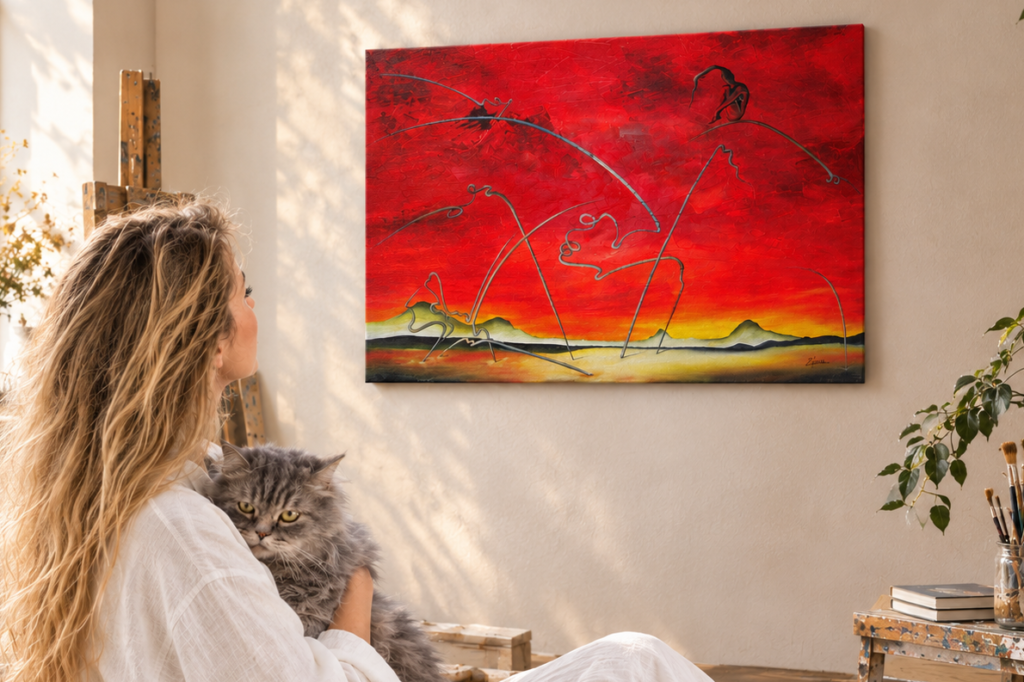
When you look at “Coming of Mashiah,” observe what arises within you. Is it stillness, tension, curiosity, or longing? Your response is your inner Messiah speaking to you. Through visual art, we bypass the noise of the analytical mind and touch the subtle, curved lines of the soul.

  • Tip: Create a quiet ritual with artwork. Don’t just look at it—sit with it. Breathe deeply and ask yourself: “What part of my inner world is this painting revealing to me?” Let the answer arrive as a feeling rather than a thought.
coming of mashiah 50x75 дет

2. Meditation: The Silence Between Breaths

We spend our lives waiting for arrival, but true arrival happens when you realize you are the destination. Meditation stills the storm of the crimson sky, allowing us to hear the quiet whisper of the inner Savior.

  • Tip: Close your eyes for just five minutes a day. Focus on your breath. As thoughts arise, do not fight them; view them as abstract lines floating through the mind. Return to the silence. With every inhalation, you ignite the divine spark within.

3. Conscious Movement: Sanctifying the Body

We are not merely spirit; we are embodied spirit. The physical body is the vessel for this divine presence. Through conscious movement—whether yoga, dance, or walking in nature—we activate life force energy and bring it down from the abstract sky of our thoughts onto the tangible ground of reality.

  • Tip: The next time you walk or move, do so with complete presence. Feel the contact of your feet with the earth. Feel the energy coursing through your limbs. Movement is how we incarnate the Savior into matter.

4. Embracing the Shadow

Notice the dark, turbulent clouds weaving through the red sky of the painting. These represent our shadows—our doubts, fears, and unhealed wounds. Awakening the inner Messiah does not mean becoming a flawless being free of struggle; it means becoming the awareness that transforms struggle into wisdom and compassion.

  • Tip: Do not run from uncomfortable emotions. Acknowledge them. Allow them space without letting them define you. The Savior within holds both light and shadow with unconditional acceptance.
Слънчево ателие с котка и картина

The Awakening

Ultimately, the question is no longer: “When will the Messiah arrive?”

The true question is: “Are you ready to wake up?”

You already possess everything you seek. You are the light that pierces the darkness of your own search. Do not wait any longer at the threshold.

Look into the depths of the canvas, feel the touch of that which existed before time began, and welcome yourself home.
Posted on — 9 Comments

The Silent Language of the Soul: A Conversation with the Artist

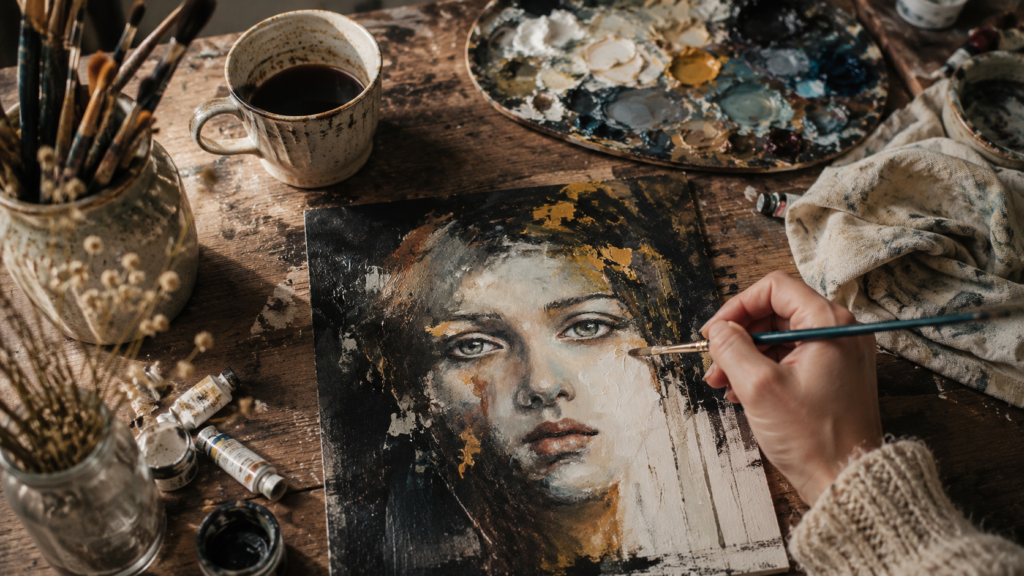
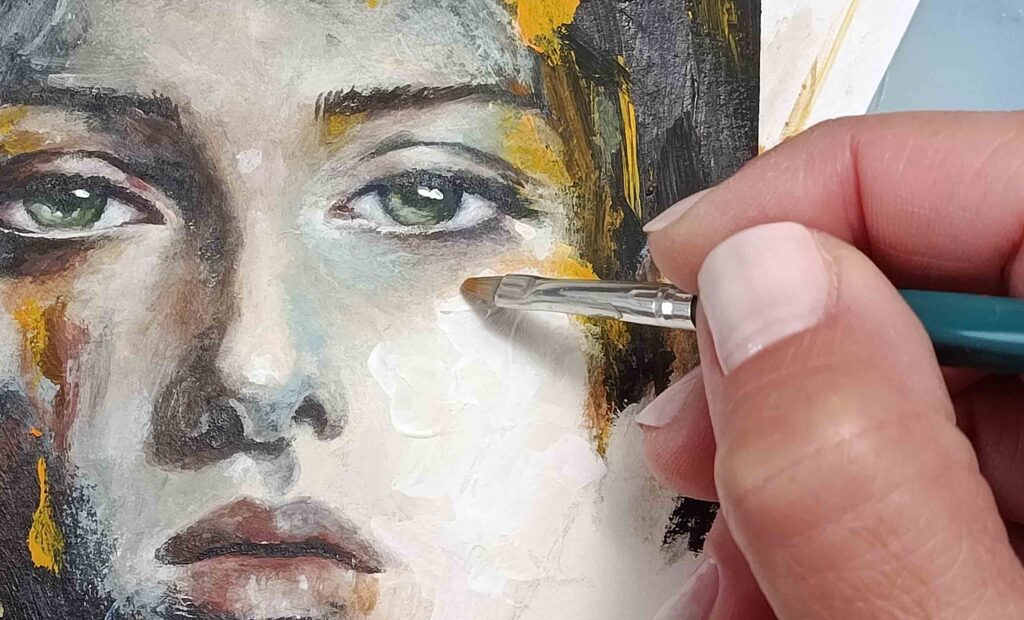
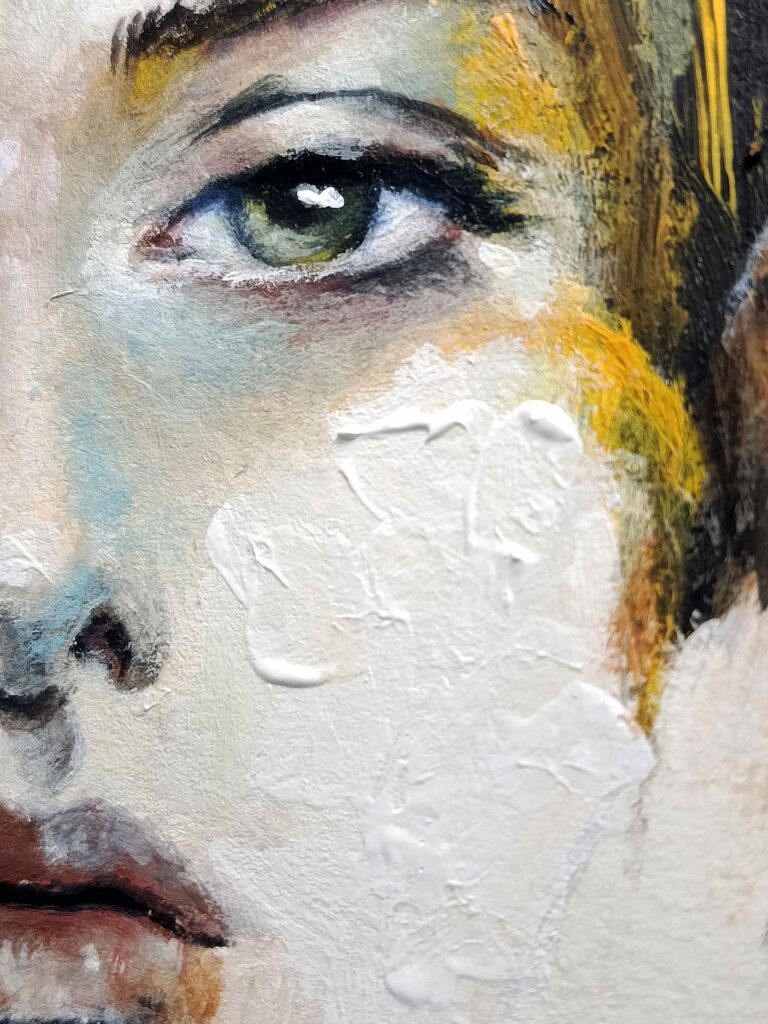
Q: The eyes in your portraits always possess a very specific presence – both mystical and melancholic. Do you intentionally seek this effect?

A: To be honest, it is not a conscious decision. It is something that happens almost beyond my control. When I stand before the paper, this “language” simply begins to flow through me. I believe every artist has a “soul signature,” and mine clearly lies in those eyes that seem to look right through the viewer. It is not sadness, but rather a quiet, enriching energy – a space where the invisible becomes visible.

Q: What do you feel in the actual moment of painting?

A: For me, it is a state of total presence. I love observing how the “creator” within me interacts with the creation at every single moment. Often, I start with one idea, and something completely different emerges – usually more charming and surpassing my own expectations. It is a process of constant discovery where I am as much a witness as I am a maker.

img 20260507 123355

Q: Why do you choose such strong contrast – almost a transition from total darkness to vivid light?

A: Contrast is my favorite tool. To me, it is a metaphor for life itself and the dualistic world we inhabit. Light cannot be truly understood without the shadow. By using this dramatic chiaroscuro on a small scale, like the A5 format, I try to concentrate the emotion, making it feel tangible, almost sculptural.

Q: How do you know when a painting is finished?

A: There is a specific moment of satisfaction that is almost physical. The painting seems to speak to me, saying: “I exist now; I have my own space, and I mean something.” They are like children to me – each with its own unique charm and character. The moment I hear that internal “I am here,” I know it is time to put down the brush.

img 20260507 123413

Q: Your art feels very intimate. What are you trying to prove to the world through it?

A: I don’t want to prove anything. I am far from the idea of competing or trying to convince anyone of something. For me, painting is food for the soul. In a world that often prefers fast pleasures, I choose to create a space for reflection and communication on the level of a “sixth sense.” If someone finds a piece of themselves in that gaze, then the connection has been made.

Q: What would you like someone to feel when they first meet the gaze of one of your portraits?

A: I would like them to feel warmth and that specific sense of fulfillment I feel while creating. I don’t look for shock or provocation. I want my paintings to be a “quiet harbor” – a place where the viewer can stop, look deep, and perhaps discover a forgotten feeling of their own that has been waiting to be validated without words.

may 7, 2026, 02 10 10 pm

Posted on — Leave a comment

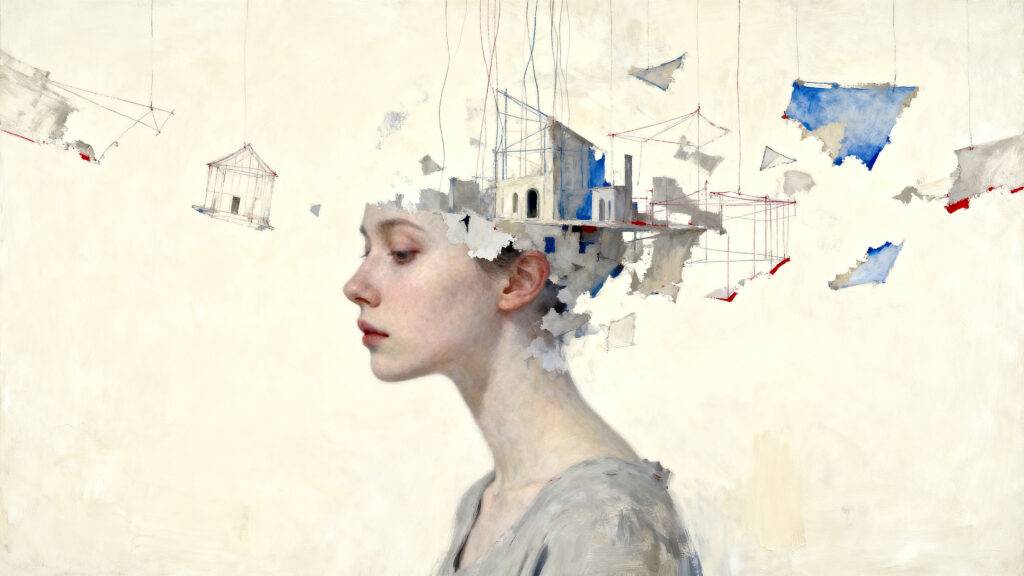
The Poetry of Unfinished Space

For a long time, I believed every part of a canvas needed to be filled.

More detail.
More texture.
More explanation.

But over time, I became fascinated by restraint.

Now, some of my favorite areas in a painting are the quietest ones:
the untouched whites, soft transitions, faded edges, and spaces where the image almost disappears.

Unfinished space creates breathing room.

It allows emotion to move gently through the painting instead of becoming trapped beneath too much information.

I think viewers feel this instinctively.
When everything is fully explained, the imagination has nowhere left to wander.

That is why I often leave traces of incompleteness in my work.
Visible brushstrokes. Dissolving forms. Open backgrounds.

Not as absence, but as invitation.

Surrealism, especially, benefits from softness and ambiguity.
Dreams themselves are never perfectly sharp. They drift. They dissolve. They leave fragments behind.

I want my paintings to feel similar:
like something remembered for a moment just before waking.

And perhaps that fragile unfinished feeling is what makes a painting continue living inside the viewer long after it has been seen.

seedream 4.0 surreal minimalist painting of a female figure her head dissolving into an abstr 0 (1)
Posted on — Leave a comment

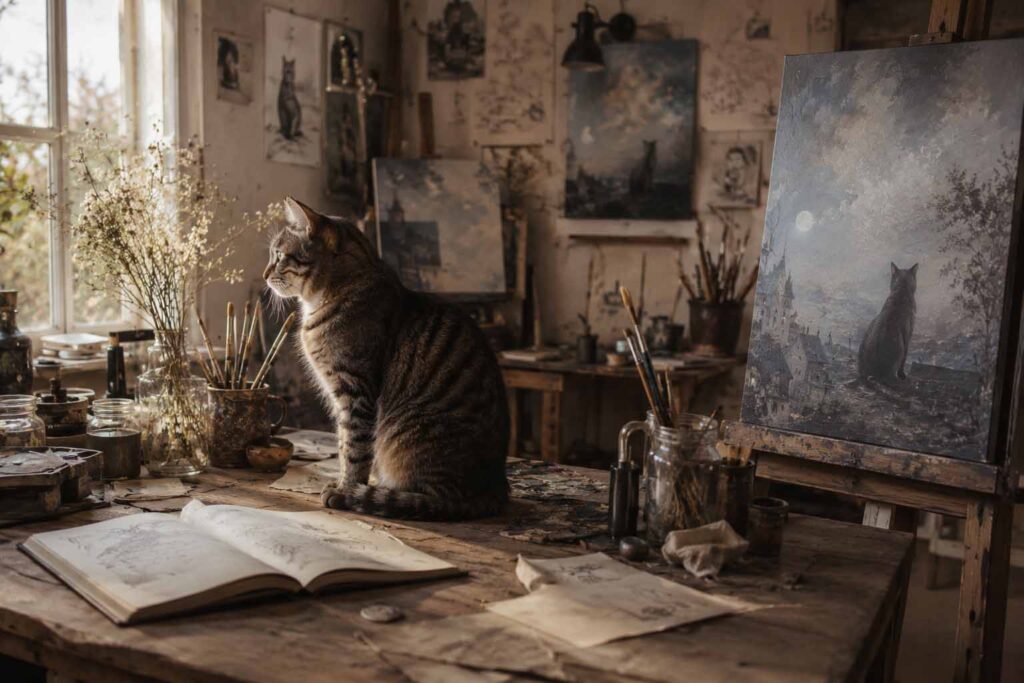
Why Cats Return to My Paintings

Cats have always felt like creatures from another language.

Not symbolic in an obvious way.
Not decorative.
More like silent witnesses moving gently through invisible worlds.

When I paint cats, I am rarely thinking about realism alone.
I am interested in mood, presence, stillness, and emotional texture.

A cat sitting near a window can transform an entire atmosphere.
Suddenly the room feels quieter. More observant. Almost suspended in time.

That feeling often enters my paintings.

I love the contrast cats naturally carry within them:
softness and mystery, elegance and distance, calmness and curiosity.

Perhaps this is why they belong so naturally inside surreal environments.
They never seem surprised by impossible landscapes.

Some collectors tell me that my cats feel thoughtful or dreamlike.
I think that may come from the way I paint emotion indirectly, through posture, light, and surrounding space rather than facial expression alone.

To me, animals in art are never secondary subjects.
They carry emotional gravity.

And somewhere between memory, imagination, and silence, cats continue to appear in my work like recurring poems.

may 7, 2026,cat in the studio
Posted on — Leave a comment

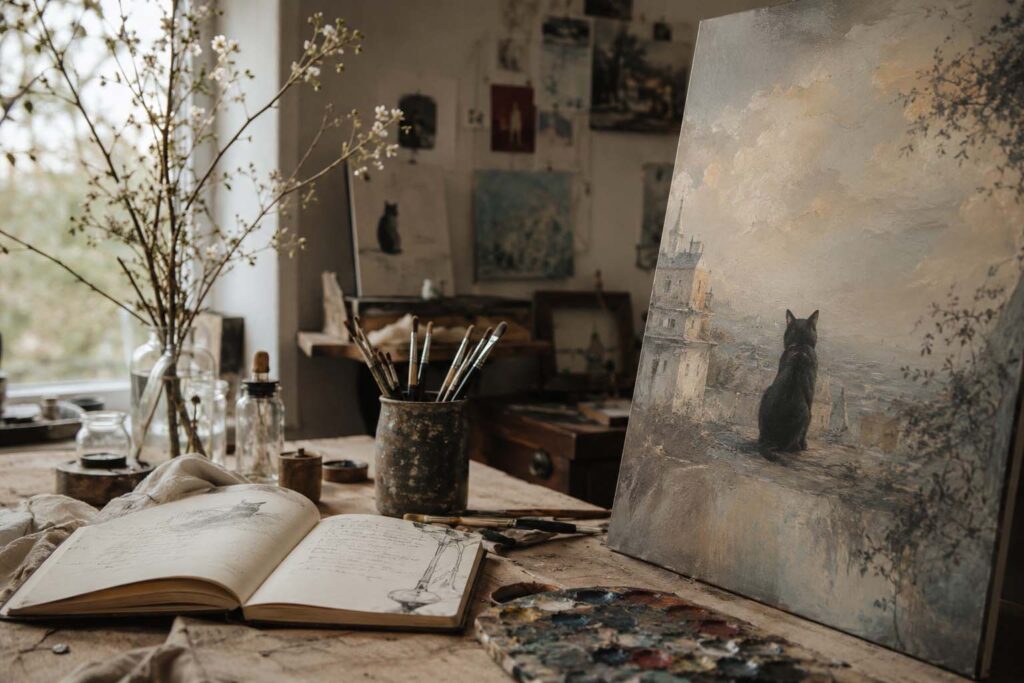
Paintings Begin in Silence

Thoughts on atmosphere, intuition, and the emotional beginning of a painting.

Sometimes a painting begins long before the canvas appears.

It starts in silence.
In a passing shadow on the wall.
In the way evening light touches a white curtain for only a few seconds before disappearing again.

I rarely plan a painting completely.
Instead, I collect fragments. Atmospheres. Small emotional echoes that stay somewhere in the background of the day.

When I finally begin painting, it feels less like inventing something and more like uncovering it slowly.

I am especially drawn to unfinished spaces in art.
Soft emptiness. White air. Areas that breathe.

Perhaps that is why many of my paintings feel suspended between dream and memory. I never want them to explain themselves too clearly. I want them to remain slightly open, like a window at night.

My process is intuitive and emotional rather than technical.
Some paintings arrive quickly. Others wait quietly for weeks before revealing what they want to become.

And sometimes the most important part of a painting is not what is added, but what is intentionally left untouched.

may 7, 2026, cozy artist studio